

Summers in Clemmons, NC, bring more than heat. The humidity that settles across the Yadkin Valley and lingers in neighborhoods near Tanglewood Park puts real strain on air conditioning systems, often in ways homeowners do not immediately connect to the air’s moisture. When an AC system runs constantly, but the house still feels muggy, humidity is usually the reason.
Automated Comfort Systems has serviced homes throughout Clemmons, NC, since 1983. This guide explains why humidity affects cooling performance and how to restore genuine comfort rather than just lower temperatures.
Why Humidity Affects Your AC Performance
An air conditioner’s job is not limited to cooling the air. It also removes moisture as part of normal operation. When humidity levels climb, the system has to perform two tasks at once: extracting heat and removing excess moisture from the air. That added workload reduces overall efficiency and can leave a home feeling warm and damp even while the unit runs continuously.
High humidity can also cause ice to form on the evaporator coil, which further reduces the system’s ability to cool effectively. In our service calls throughout Clemmons, this pattern shows up most often in homes with older systems that were sized correctly for temperature but not for the moisture load typical of a Piedmont Triad summer.
Routine AC maintenance helps a system continue managing humidity effectively even as components age, extending its useful life and keeping performance consistent through the most demanding months.
Common AC Issues Caused by High Humidity
Persistent humidity does more than make a home feel uncomfortable. It creates conditions that lead to specific, identifiable problems over time.
- Mold and mildew growth: Excess moisture creates ideal conditions for growth that can affect indoor air quality and health
- Reduced efficiency: The system works harder to manage both temperature and moisture, increasing energy consumption
- Ice formation: Excessive humidity can cause the evaporator coil to freeze, leading to malfunction and costly repairs
- Uneven cooling: Some rooms may struggle to reach a comfortable temperature while others cool normally
A preventive maintenance plan that includes regular inspections catches these issues before they escalate into larger repairs and provides homeowners with predictable, budgeted service rather than reactive emergency calls.
How Humidity Levels Impact Energy Efficiency
Humidity and energy efficiency are directly connected. When indoor air is too humid, the system draws more power removing moisture, which increases both wear and monthly utility costs. This also creates a secondary problem: humid air feels warmer than the actual temperature, which often leads homeowners to lower the thermostat further, compounding the energy draw.
Regular cleaning of the system’s internal components, including the evaporator and condenser coils, keeps the equipment operating closer to its rated efficiency even under heavy humidity load. A properly maintained system manages moisture with far less strain than one running with accumulated dirt or buildup on its core components.
Solutions for Improving AC Performance in Humid Conditions
Several strategies genuinely improve how a system handles humidity, both immediately and over the long term.
- Scheduling regular maintenance: Filter changes and coil cleaning restore airflow and heat transfer efficiency
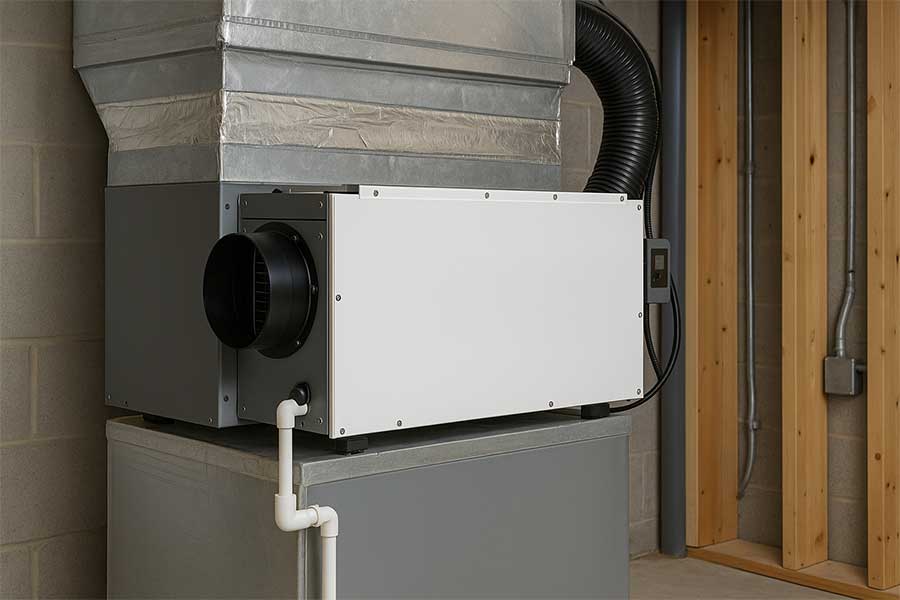
- Adding a dehumidifier: A dedicated unit reduces the moisture load the AC system has to manage on its own
- Adjusting thermostat settings: A slightly higher setting can reduce system strain while maintaining comfort
- Sealing air leaks: Gaps around windows, doors, and ductwork let humid outdoor air into the conditioned space
- Using ceiling fans: Improved air circulation helps a space feel cooler without additional load on the AC system.
For homes where humidity remains a persistent problem despite these steps, a professional evaluation of the AC installation itself may be worthwhile. An undersized or improperly matched system will always struggle with humidity control, regardless of how well it is maintained.
What a Properly Sized System Changes
Humidity problems are sometimes less about maintenance and more about equipment that was never matched correctly to the home in the first place. A system that is oversized for the space cools quickly but shuts off before it has run long enough to remove adequate moisture, leaving the air cold but still damp. This short-cycling pattern is one of the more common causes of persistent humidity complaints our technicians encounter.
A proper load calculation accounts for square footage, insulation, window placement, and the specific humidity patterns common to Clemmons and the surrounding Forsyth County area. Getting this right at the point of installation prevents years of humidity-related discomfort that no amount of after-the-fact maintenance can fully resolve.
When to Call Automated Comfort Systems for Help
Certain signs indicate it is time to bring in a professional rather than continue managing the problem informally.
- The system runs constantly without meaningfully reducing indoor humidity
- The home feels uncomfortable despite a properly set thermostat
- Strange noises or unpleasant odors are coming from the unit
- Visible leaks or excessive moisture appear in or around the equipment
Automated Comfort Systems offers 24/7 priority service to Comfort Club members, ensuring that when these issues arise, homeowners are not left waiting.
Comfort That Doesn’t Miss a Beat
Understanding how humidity affects your AC system is the first step toward solving the discomfort it causes. Automated Comfort Systems Heating & AC Repair has been keeping homes across Clemmons and the greater Piedmont Triad comfortable since 1983, so if your system has been struggling to keep up with Clemmons humidity, contact our team today and let us help you get real comfort back into your home.