


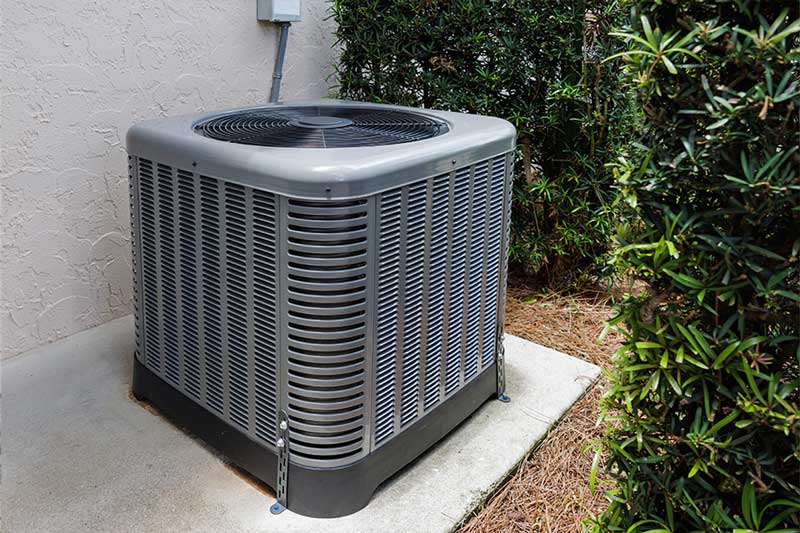
If you have started shopping for a new air conditioner, you have probably come across the term “3-ton unit” more than once. For many homes across the Piedmont Triad, it is right in the sweet spot for whole-home cooling. As an HVAC contractor serving Clemmons and the surrounding Piedmont Triad, we work with homeowners throughout Forsyth, Davidson, and Davie counties on equipment decisions like this every day, and the questions are always the same: What will this cost? What size do I actually need? And how do I know I am making a smart long-term investment? This guide answers all of that.
What Is a 3-Ton AC Unit?
The word “ton” throws a lot of people off. It has nothing to do with the equipment’s weight. In the HVAC industry, tonnage is a measure of cooling capacity, specifically how much heat the system can remove from your home per hour.
One ton of cooling equals 12,000 BTUs (British Thermal Units) per hour. A 3-ton unit, then, removes 36,000 BTUs of heat every hour. That is a substantial amount of cooling power. For homes in the right size range, it is exactly what is needed to keep indoor temperatures stable and comfortable through a North Carolina summer.
Why Consider a 3-Ton Unit?
A 3-ton air conditioner is one of the most commonly installed residential systems in the Piedmont Triad, and for good reason. It covers a broad range of home sizes, performs reliably in our hot and humid climate, and is widely available across major equipment brands.
Here is why homeowners often land on a 3-ton system:
- Right-sized for mid-range homes: Generally suited for homes between 1,500 and 2,400 square feet, though other factors also apply
- Efficient performance: Modern 3-ton units carry high SEER2 ratings, meaning they cool effectively without driving up monthly energy bills
- Compatible with most existing ductwork: In homes already equipped with central air, a 3-ton replacement is often a straightforward fit.
- Broad equipment selection: More brands, efficiency tiers, and compressor types are available at this capacity than almost any other
That said, square footage alone does not determine the right size. In our service calls throughout Clemmons and the broader Triad, we regularly see homes where ceiling height, window placement, insulation quality, and sun exposure push the actual load higher or lower than a square footage estimate would suggest. Proper sizing always starts with a professional load calculation.
3-Ton AC Unit Pricing Guide
One of the most common questions we receive is: “How much does a 3-ton air conditioner cost?” The honest answer is that the price range is wide, because the total cost reflects much more than the equipment itself.
What to Expect to Pay
For a standard 3-ton central air conditioning installation or replacement, most homeowners in North Carolina should budget somewhere in the range of:
- Equipment and installation combined: Roughly $5,000 to $12,500 for a typical residential replacement
- Full HVAC system replacement (AC plus air handler or furnace): Can range from $7,000 to $25,000, depending on complexity
- Premium, high-efficiency systems: May exceed $15,000 or more for top-tier variable-speed equipment
These are general ranges. Your actual cost depends on several variables, all of which a qualified technician will walk you through during an on-site estimate.
What Drives the Price Up or Down
Several factors shape where your project lands within that range:
- Equipment brand and efficiency tier: Higher SEER2 ratings reduce long-term energy costs but increase upfront investment
- Compressor type: Single-stage systems cost less to purchase but may result in higher monthly bills. Two-stage and variable-speed compressors offer better efficiency and comfort at a higher initial price.
- Ductwork condition: If your existing ducts are leaky, undersized, or deteriorating, repairs or replacement can significantly increase the total. Minor sealing work may run $200 to $1,000; a full ductwork replacement can reach $2,000 to $12,000 or more.e
- Electrical requirements: Older homes sometimes need panel upgrades or new dedicated circuits to support modern equipment safely
- Refrigerant type: The industry has transitioned to newer refrigerant standards, and systems using the latest A2L refrigerants may carry slightly different pricing due to equipment and handling requirements
- Permits and inspections: Required for any full HVAC installation in North Carolina, permit costs are standard and are typically included in a contractor’s overall quote
Our AC installation process includes a detailed upfront assessment to avoid surprises once the work begins.
What to Consider When Purchasing a 3-Ton AC
Price is only one piece of the decision. Before committing to a system, consider these factors carefully.
Is 3 Tons the Right Size for Your Home?
As a starting point, a 3-ton unit is generally appropriate for homes between 1,500 and 2,400 square feet. But the right size for your home is not something to guess at. An undersized unit runs constantly without reaching your set temperature, wearing out faster, and driving up energy bills. An oversized unit short-cycles, meaning it cools too quickly and shuts off before properly dehumidifying the air, leaving the home feeling clammy and uncomfortable.
Working in homes across the Triad, we consistently find that those who struggle most with comfort are those where the equipment was sized solely by square footage, without accounting for the full picture. A proper Manual J load calculation considers ceiling height, insulation levels, window area and orientation, and local climate conditions. That is the only reliable foundation for a sizing recommendation.
Single-Stage, Two-Stage, or Variable-Speed?
The compressor is the heart of your air conditioning system, and the type you choose has a significant impact on both comfort and operating costs.
- Single-stage: Runs at full capacity or not at all. Lowest upfront cost, but less precise temperature and humidity control
- Two-stage: Operates at a reduced capacity most of the time and ramps up on the hottest days. Better dehumidification and more consistent comfort than a single-stage system
- Variable-speed: Continuously adjusts output to match your home’s exact cooling needs at any given moment. The most efficient and comfortable option, and typically 50 to 70 percent more expensive than single-stage upfront, though the long-term energy savings are substantial
For homes in the Piedmont Triad, where summer humidity can be relentless, two-stage and variable-speed systems often offer better long-term value, even when the initial investment is higher.
Central Air, Ductless, or Heat Pump?
The type of system matters as much as the size. Here is a brief breakdown of the primary options available at or near the 3-ton capacity:
- Central air conditioning: The standard whole-home solution that distributes cooled air through existing ductwork. Works well in homes that already have a functioning duct system
- Ductless mini-split: Ideal for homes without ductwork, additions, or areas that need independent temperature control. A ductless mini-split system at this capacity can range from $1,300 to $8,000 installed and typically provides both heating and cooling.
- Heat pump: Functions as an air conditioner in summer and reverses to provide heating in winter, making it an efficient all-in-one solution. Heat pump installations in the 3-ton range typically range from $5,500 to $8,000 or more, depending on system type and efficiency.
Each option has its place, and the right choice depends on your home’s layout, existing infrastructure, and how you use the space.
Repair or Replace?
If your current system is struggling, it is worth asking whether a repair makes more financial sense before committing to a full replacement. A few useful guidelines:
- The 50% Rule: If the repair cost is 50% or more of what a new system would cost, replacement is generally the smarter investment
- The $5,000 Rule: Multiply the age of your current unit by the estimated repair cost. If that number exceeds $5,000, replacement typically offers better value.
- Age: Most central air conditioners last 15 to 20 years. A unit approaching that range is likely to require increasing attention, regardless of how well it has been maintained.
Based on what we see in Triad-area properties, many homeowners put off replacement longer than it makes financial sense. A newer, correctly sized, high-efficiency system almost always results in lower monthly operating costs compared to keeping an aging system limping along.
Long-Term Costs vs. Upfront Price
It is tempting to choose the lowest sticker price. But a system’s true cost includes what you pay to run it every month for the next 15 years. Modern 3-ton units can be 30 to 50 percent more efficient than equipment installed a decade ago. That difference shows up clearly on your utility bill every summer.
Higher SEER2 ratings mean less electricity consumed per hour of operation. In a climate like ours, where air conditioners run hard from late spring through early fall, that efficiency gap adds up quickly. The right question is not just what a system costs today, but what it will cost over its entire service life.
Automated Comfort Systems: Conditioning the Way We Do Business
Choosing the right 3-ton system is a meaningful investment, and it deserves more than a quick online estimate or a phone quote based on square footage. At Automated Comfort Systems Heating & AC Repair, we have been helping homeowners across the Piedmont Triad make confident, informed HVAC decisions since 1983. Every recommendation we make starts with a thorough assessment of your home’s actual needs, and every installation is backed by our commitment to honest, energy-efficient service.
Whether you are replacing an aging system, upgrading for better efficiency, or exploring your options for the first time, we are here to help you find the right fit at a fair price. Contact our team today to schedule your AC installation assessment and get started.